In summary
- Podiatrists say many common causes of foot pain, from plantar fasciitis to bunions, are easily treated once you understand what's causing them.
- Poorly fitting footwear is one of the most common culprits, so choosing shoes with a wider toe box and proper support can prevent several conditions.
- Simple foot fixes like rest, ice, massage, stretching and orthotics can ease most issues, but persistent pain that affects your quality of life warrants a doctor's visit.
Foot pain can make something as simple as a walk around the block feel like a challenge. The good news is that many common causes of foot pain are easily treated, according to podiatrists.
Poorly fitting footwear is one of the most common causes of foot pain, according to Daniel Stewart, a foot and ankle surgeon. “Shoes that are too narrow at the toe area, unsupportive and inappropriate for the intended activity can put excessive pressure on the feet,” he explains. Other common causes are plantar fasciitis, which Daniel says tends to be especially painful in the morning and after rest, and flat feet.
“The foot has almost as many bones as the hand and wrist, so it’s a complicated piece of real estate,” says Rick Olderman, an orthopaedic physiotherapist and author of Fixing You: Foot & Ankle Pain. “Yet we don’t pay much heed to our feet until there are problems.”
“The first step in fixing chronic foot pain is to understand why you’re having it,” says Rick. Read on for the most common causes of foot pain – and what to do about achy feet.
Foot pain causes and treatments
Here, the most common issues that may keep you from pounding the pavement, and what to do for happy feet once again.
1. Plantar fasciitis
“This is by far the most common problem I see in my middle-aged patients,” says Jeffrey Oster, a podiatrist and foot surgeon. Plantar fasciitis is an overuse syndrome that causes painful inflammation of the band of fibrous tissue that runs along the bottom of your foot (called the plantar fascia).
“You don’t find plantar fasciitis in children – they heal too quickly. And you don’t find it in older folks because they’re not out there doing activities that would contribute to it,” says Jeffrey. But if you’re somewhere in the 40- to 65-year-old range, you may be more likely to experience heel pain.
“The force on your feet is about 120 per cent of your weight,” Jeffrey says. “Over time, that causes the tissue in the foot to become less elastic,” he adds, leading to pain.
Foot fix: Massage and stretch your feet and calves.
Massage and stretching can help lengthen the plantar fascia and increase blood flow to the area, which can promote healing. Placing a tennis ball or rolling pin under the arch of the foot and gently rolling it back and forth is one at-home strategy that may provide relief. You can also seek out medical massage therapists who have experience treating this condition. Since it’s a common condition among runners, you may want to search for a massage therapist with sports medicine experience.
And while buying shoes for plantar fasciitis or trying new insoles won’t cure your condition, it can certainly help make things more comfortable.
2. Bunions
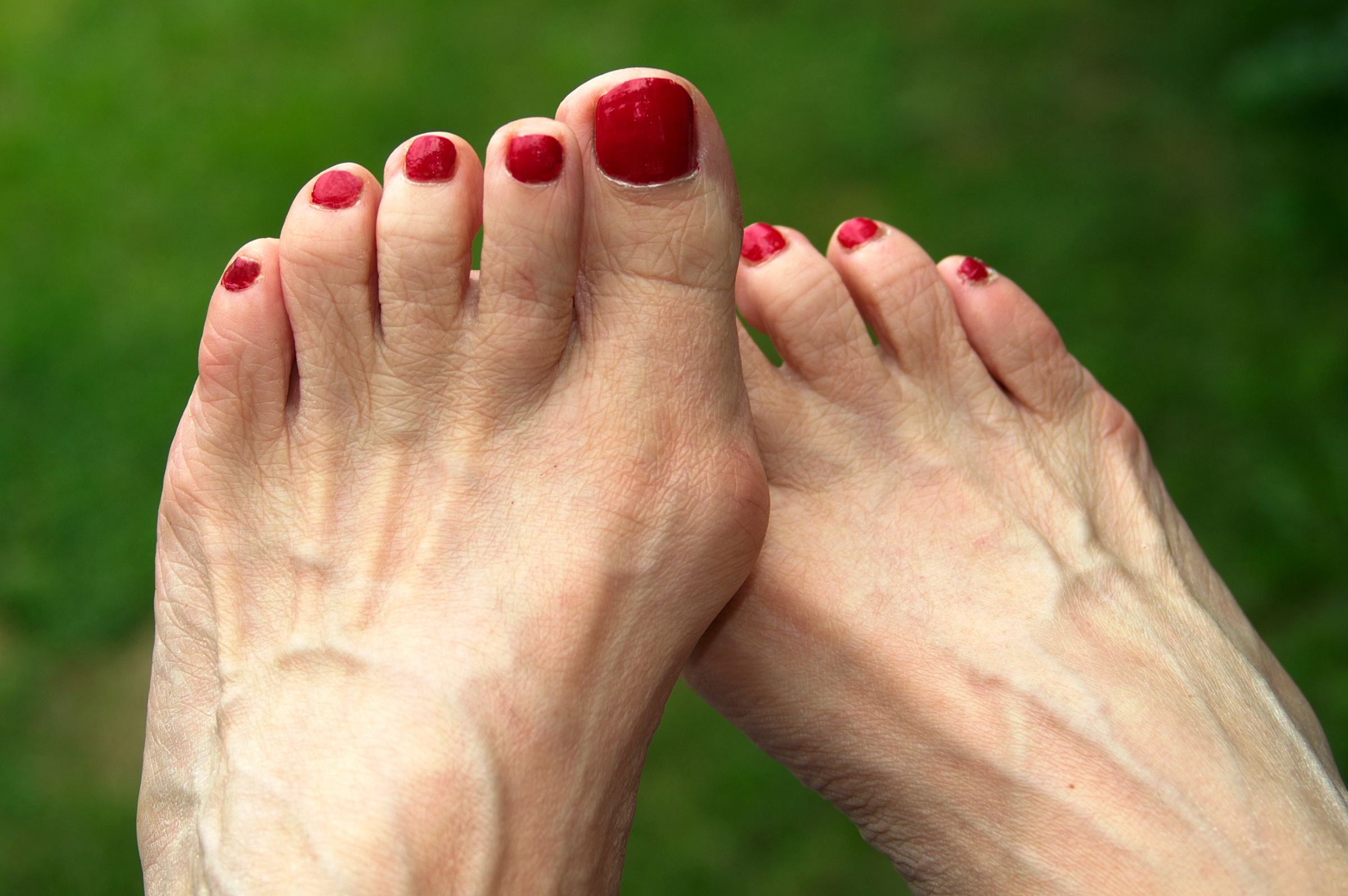
With bunions, a firm, painful bump develops at the base of the big toe, sometimes causing that toe to veer diagonally towards the second toe. Bunions can get worse if you consistently wear too-tight shoes, says Suzanne Fuchs, a holistic podiatrist and fitness specialist. “These joints commonly become painful when shoes rub against them and cause inflammation, swelling and redness,” she says.
Foot fix: Choose the right shoes.
To help prevent bunions in the first place, make sure you’re wearing shoes with a wider toe box, says Suzanne. There should be about a centimetre of space between the tip of your longest toe and the end of the shoe. “Your shoes shouldn’t cause too much pressure on your feet and toes or cause them to crunch up,” she says.
You might also add specific padding to help alleviate calluses (caused when these enlarged toe joints rub against your shoes) or talk to your doctor about adding orthotics to your shoes, says Suzanne. These prescribed inserts “can improve the biomechanics of the foot, helping to balance the muscles and tendons and stop bunions and hammertoes from worsening,” she explains.
3. Hammertoes
A hammertoe is a foot deformity in which there’s an abnormal bend in the middle joint of your toe. Hammertoes happen when there’s an imbalance in the muscles of your foot.
“You have muscles at the top and bottom of your feet. If one of those muscle groups is stronger than the other, it may result in a hammertoe,” explains Jacqueline Sutera, a podiatrist specialising in women’s foot care. The toe becomes crooked because one of the toe muscles becomes weak, which puts pressure on the tendons and joints in one or more toes. This causes the toe to stick up at the joint.
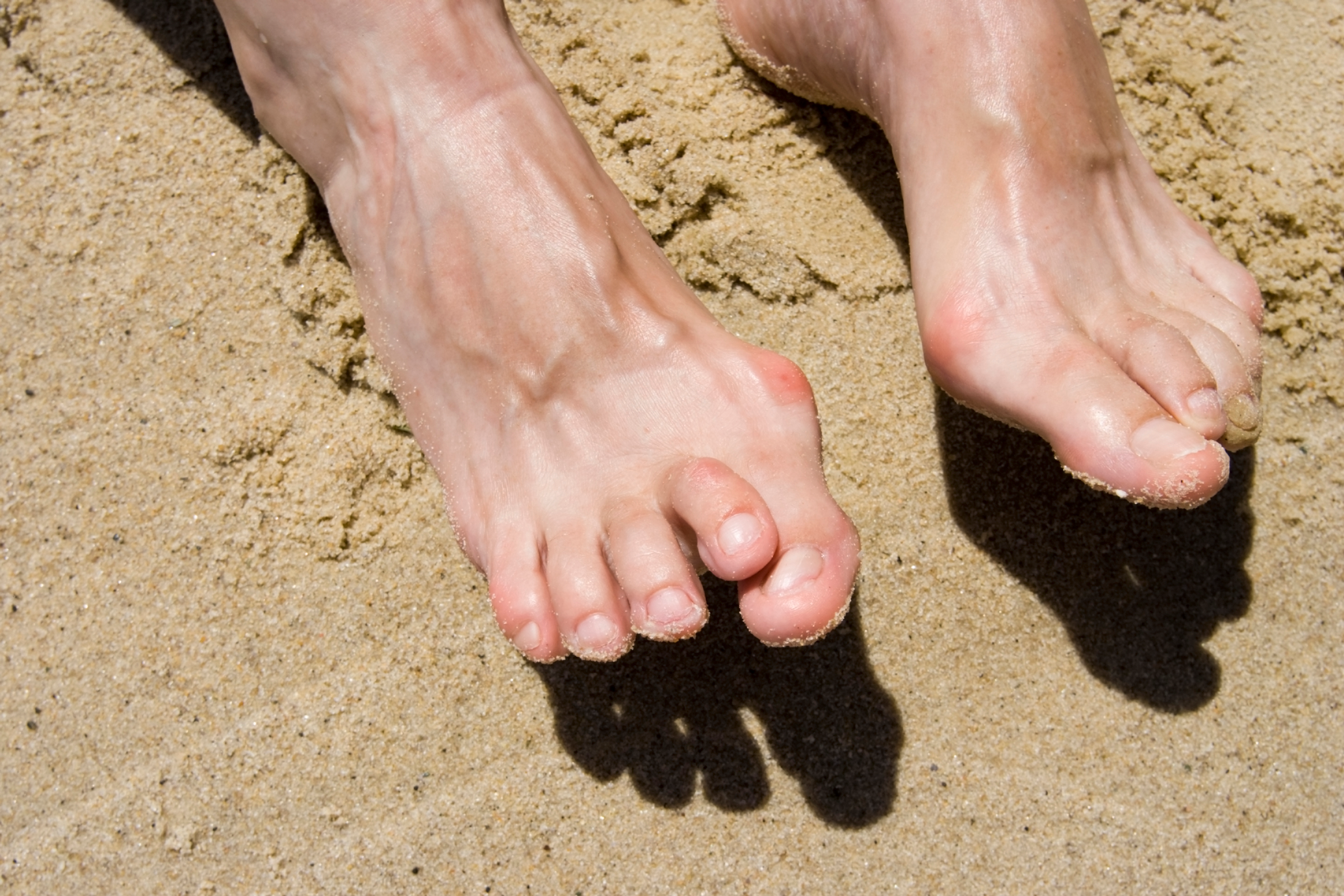
Jacqueline says that wearing poorly designed shoes that don’t fit your feet, incurring an injury such as stubbing your toe and having a family history of hammertoe are common causes. People with hammertoe are also prone to developing corns and calluses, she adds.
Foot fix: Use non-medicated corn pads.
“I recommend my patients use non-medicated corn pads because they provide support and cushion while helping to relieve pain and prevent friction,” Jacqueline says.
Medicated corn pads should be avoided in this case “because the acid in the medication can eat away at your skin and cause bacteria to form, which leads to an infection,” she says.
Jacqueline also recommends wearing shoes that are appropriately sized and designed for the activity you’re doing. “Wear commuter shoes on your way to work, but don’t wear your high heels all day,” she says. If the issue worsens and you’re experiencing a lot of discomfort, Jacqueline says to consider surgery: “It takes 15 minutes and you’re under local anaesthetic.”
4. Flat feet
Flat feet occur when the foot completely lacks an arch, meaning your entire foot touches the floor when standing.
Many people are born with flat feet, but you can also develop them later in life due to direct trauma to the posterior tibial tendon, which attaches your calf muscles to the bones on the inside of your feet. “If you do high-intensity sports or exercise, the posterior tibial tendon can be overused and inflamed. You can develop flat feet because of this,” Jacqueline says. She also says people with flat feet are prone to developing plantar fasciitis and bunions.
Foot fix: Wear orthotics.
“The best thing to do is to wear appropriate shoes and orthotics, which forces your foot to walk with an arch,” Jacqueline says. “Orthotics will also help absorb shock from walking or running and help prevent pain in the ankles, knees and back, which are affected with flat feet.”
5. Calluses
While most of us think of these areas of thick skin as simply unsightly, calluses are pressure spots that can be painful when you walk, says Jeffrey. Interestingly, they’re actually the body’s way of preventing painful blisters from developing. Without a callus, the pressure and friction would irritate your skin to the point of creating those painful, fluid-filled bubbles you know as blisters.
However, that doesn’t help if your calluses – oftentimes on the ball of the foot, the heel or the top of bunions or hammertoes – keep you from walking or running around comfortably.
Foot fix: Soak, then soften.
To treat calluses at home, soak your feet in warm water and then apply a moisturising lotion that’s loaded with glycolic acid, lactic acid or urea. These ingredients can help soften the skin and minimise the callus. If your callus is especially large or painful, schedule an appointment with a podiatrist or dermatologist who can remove it with a surgical blade, or administer a shot of cortisone if your pain is particularly bad.
6. Turf toe
Turf toe is a sprain of the main joint of the big toe, according to the American Academy of Orthopaedic Surgeons (AAOS). This can happen when the toe is forcibly bent up, like when you’re pushing off into a sprint and the toe gets stuck on the ground, says Miguel Cunha, a podiatrist and foot and ankle surgeon.
“It can happen to any toe, but 90 per cent of the time it’s the big one,” explains Melissa Lockwood, a board-certified podiatrist. “It usually happens when you’re trying to push off the big toe and another force – a person running into you, a car accident, riding a horse – pushes you down. It causes the ligaments around the joint to stretch and sometimes break. It’s very painful.”
The injury got the name ‘turf toe’ because it became more common in American football players after artificial turf became popular on playing fields, the AAOS says. (Artificial turf is a harder surface than grass and it doesn’t have much give.) Turf toe can cause pain, swelling and stiffness at the base of the big toe. “This develops slowly and progresses over time,” Miguel says.
Foot fix: Rest, ice, compress, and elevate your toe.
It’s an acronym known as RICE. “You want to make sure that your injury gets the rest it deserves, which also can protect it from further injury,” Miguel says. Icing it and compressing the injury (any wrap will do) can help tamp down on swelling and ease your pain, he says.
Finally, you want to elevate your foot (say, on top of a pillow) to ease the pressure. “Because your feet take on pressure that you don’t even realise, you want to pay close attention to making sure that you’re not further injuring yourself,” Miguel says.
7. Achilles tendonitis
Your Achilles tendon, which attaches to your heel bone at the back of your foot, can become irritated and inflamed when it’s overused, says Suzanne. The result is tendonitis, and runners are particularly susceptible, she says, as are those who regularly wear high heels. Other potential, though less common, causes include inflammatory illnesses such as rheumatoid arthritis or gout.
Foot fix: Rest, ice, repeat.
The sooner you nip this problem in the bud, the better, Suzanne says, which is why she recommends avoiding any activity that aggravates your pain for a week to a month. When you feel even a little twinge, ice the area ASAP. Your doctor may also suggest you take a non-steroidal anti-inflammatory (like ibuprofen) to ease your discomfort and inflammation.
8. Metatarsalgia
“This is a common foot disorder that can affect the bones and joints at the ball of the foot,” Miguel says.
Most metatarsal issues happen when something changes in the way your foot normally works, impacting how your weight is distributed, Miguel says. This can put extra pressure on the ball of your foot, leading to inflammation and pain.
Sometimes one thing can cause metatarsalgia, but usually several factors play a role, like doing intense training. “Runners are at risk of metatarsalgia, primarily because the front of your foot absorbs significant force when you run,” Miguel says. “This condition commonly occurs when performing high-impact activities, especially if your shoes are ill-fitting or are worn out.”
Foot fix: Get new shoes, consider orthotics, and rest up.
Your doctor will likely want to do an X-ray first to make sure your bones and joints look okay, and that you’re not actually dealing with a stress fracture, Miguel says.
If your shoes are worn out, it’s best to get a new pair. “Footwear designed with a high, wide toe box and a rocker sole is ideal for treating metatarsalgia,” Miguel says. “The high, wide toe box allows the foot to spread out, while the rocker sole reduces stress on the ball of the foot.” Orthotics that are designed to reduce pain on the ball of your foot can also help, he says.
Other than that, resting, icing, and using oral and topical anti-inflammatories can help, Miguel says. If you do all of this and you’re still in pain, your doctor might recommend surgery. (It’s rare that it’s needed, though, Miguel says.)
9. Tarsal tunnel syndrome
Tarsal tunnel syndrome is actually similar to carpal tunnel syndrome – just in your feet. “Similar to carpal tunnel, it’s caused by mechanics ‘pinching’ the nerve,” says Melissa.
This can result in pain, numbness and tingling, often due to a previous ankle injury or having flat feet. “People with flat feet are more susceptible to tarsal tunnel syndrome because the outward tilting of the heel that occurs with fallen arches produces strain and tension on the nerve,” Miguel says.
Foot fix: Rest, ice, and take anti-inflammatories.
RICE is a good solution, Miguel says, adding that “you can take anti-inflammatory medications to reduce inflammation.” Physiotherapy may also help reduce your pain, and it doesn’t hurt to get orthotics that can help support your foot’s arch and take the stress off your tibial nerve (a major nerve of your lower body), Miguel says.
10. Morton’s neuroma
This condition causes pain in the ball of your foot that commonly radiates towards your third and fourth toes, says Suzanne. “It can feel as if you’re standing on a pebble that’s stuck in your shoe,” she says.
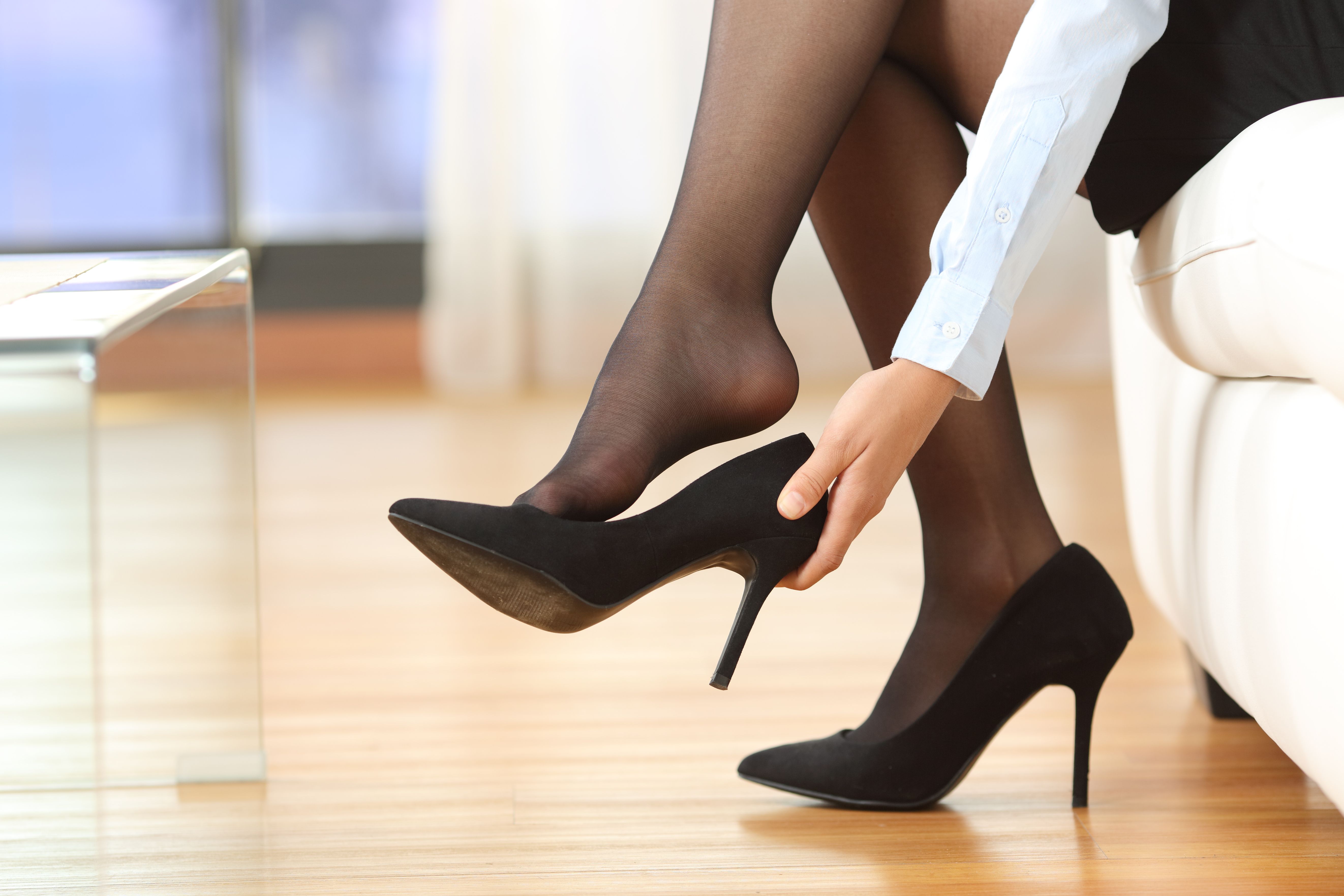
Jacqueline says Morton’s neuroma is often the result of wearing high heels or pointy, narrow shoes. “Your metatarsals, which are the bones in your feet, are compressed when you’re wearing tight shoes. They put pressure on the nerves around them, causing a sharp, stabbing pain,” she explains.
High-impact sports like tennis and running can also cause Morton’s neuroma. The repetitive pounding on hard surfaces can cause trauma to the nerves that lead to your toes. People who have bunions, hammertoes, high arches or flat feet are also at higher risk for Morton’s neuroma.
Foot fix: Try new shoes, custom orthotics, and possibly cortisone injections.
One thing you can do for quick relief is to massage the space between the metatarsals, Jacqueline says. “Take your thumbs and use them to massage the top of your foot, and use your other fingers to put pressure at the bottom. Massage the spaces in between your toes where the nerves live,” she says.
Make an appointment with your doctor to do an X-ray to rule out other problems, and follow up with an ultrasound or MRI, which are better diagnostic tools for revealing soft tissue abnormalities. Then, you may be in for a shoe shopping spree, as ill-fitting shoes contribute to your problem and make the pain worse, says Suzanne.
“You might be able to try arch supports, foot pads or custom orthotics, which will help contour and cushion your foot while you walk,” she says. Jacqueline also recommends wearing a variety of shoes and tossing out those with uneven or damaged soles. If these more conservative tactics don’t work, cortisone injections or even surgery to relieve the compression on the nerve could be options.
11. Arthritis
Arthritis happens when the cartilage in your joints begins to wear down and cause inflammation. When it comes to feet, it usually impacts the big toe joint, but it can also crop up in other joints, Miguel says.
Arthritis can usually be traced back to former injuries and traumas like broken bones and sprains, but one of the biggest factors is age, since your cartilage wears down over time, he explains.
Symptoms usually include tenderness and pain, stiff and swollen joints, and trouble walking or bearing weight.
Foot fix: Take anti-inflammatories, use orthotics, and undergo physical therapy.
There are a bunch of different treatment options when it comes to arthritis, and Miguel says a lot depends on where the arthritis is and how severe it is. Here are just a few to consider:
- Oral and topical anti-inflammatory or pain-relieving medications
- Steroid injections
- Custom-moulded orthotics
- A type of brace called an ankle-foot orthosis
- Physiotherapy
- Maintaining a healthy weight
If you have arthritis and it doesn’t get better with more conservative treatments, Miguel says your doctor might recommend surgery.
12. Bursitis
When joints within the foot undergo repetitive motion or direct pressure, painful, fluid-filled sacs called bursae can develop. They’re often caused by the frequent wearing of tight shoes, high heels or long hours of standing. They can also cause general stiffness, swelling and redness at the affected areas.
Foot fix: Adjust exercise practices, footwear, and reduce swelling with ice and anti-inflammatories.
The Australian Podiatry Association points out that painful feet are not a normal side effect of everyday activity, so if you think you have bursitis, see a podiatrist. Treatment plans may include wearing more supportive footwear, prioritising foot stretches before exercise and taking over-the-counter anti-inflammatories.
13. Stress fracture
It may seem obvious, but you’d be surprised by how easy it is to endure chronic pain that is actually a bunch of tiny stress fractures caused by overuse of the feet, usually in athletes. Research shows that stress fractures most commonly affect the feet, and often go undiagnosed or missed because the pain can ease once the activity stops. The delay of treatment can make the prognosis much worse, so it’s crucial that the proper diagnostic steps are taken as soon as possible.
Foot fix: See a podiatrist ASAP.
After proper X-rays and imaging confirm the stress fractures, a podiatrist can provide a treatment plan that will likely include rest and keeping pressure off the injury.
When should I see a doctor for foot pain?
Overall, if you have foot pain that persists and it’s bothering you, Miguel says you should at least talk to your doctor. That’s especially true if it’s impacting your quality of life and doesn’t seem to be getting better. “We have lots of conservative, non-surgical ways to treat all of these problems,” Melissa adds.
Daniel suggests speaking to a doctor if conservative at-home methods – like switching to a well-fitted shoe or over-the-counter insoles, exercise and stretching – haven’t alleviated your pain.

 Newsletter
_(2).png&h=90&w=90&c=1&s=1)