In summary
- 11 lines, or glabellar lines, form from repeated contraction of the corrugator supercilii and procerus muscles, usually taking two-plus decades to become permanent.
- Botox is considered the most effective treatment, either preventing 11 lines from forming as “pretox” or relaxing them once they’ve appeared.
- Once lines are deeply etched into the skin, they can't be removed naturally and may not be fully eliminated even with treatment.
It can feel frustrating when you spend a lot of time and effort on your skin, only to notice 11 lines surfacing. Those forehead wrinkles, which are also known as frown lines, develop in the skin over time.
To be fair, 11 lines are a normal part of ageing. But it’s also safe to say that most people don’t want them to show up early. They aren’t harmful, and there’s no need to get rid of them if they’re not bothering you.
But if you have 11 lines and would rather you didn’t, there are a few things you can do to treat them. Dermatologists and an aesthetic nurse practitioner explain what causes frown lines, how to delay them and what options are available to you once they surface.
What are the 11 lines?
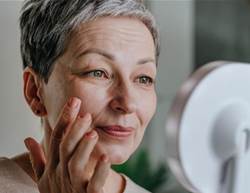
Eleven lines are medically known as glabellar lines, or “vertical parallel lines that appear between the eyebrows,” explains Dr Cula Svidzinski, a cosmetic dermatologist. They’re casually referred to as 11 lines because they often come in pairs, resembling the number 11.
“Initially, these lines are visible with muscle contraction only,” Dr Svidzinski adds – say, when you furrow your brow to read fine print. “However, with repeated movements and loss of collagen from ageing or sun damage over time, the lines may become permanent.”
Types of forehead wrinkles
There are two main types of forehead wrinkles, explains Dr Svidzinski:
11 lines or glabellar lines
As previously mentioned, 11 lines are vertical lines that appear between the brows due to repeated expression and movement of the brows and forehead.
Horizontal forehead lines
These are horizontal wrinkles that run across the forehead, often due to repeated raising of the eyebrows.
Dynamic vs. static wrinkles
In general, wrinkles also fall into two categories, adds Dr Elizabeth Houshmand, a double board-certified dermatologist. They’re dynamic and static. “Dynamic wrinkles develop from repeated facial movements and are visible only when making facial movements,” she says. “Static wrinkles appear at rest and can be seen without any movement.” Static wrinkles are often caused by sun exposure, loss of elasticity and ageing, she adds.
Why do 11 lines usually form?
These typically form from repeated motion by two muscles: the corrugator supercilii, which pulls your brows together, and the procerus, which pulls the skin between the brows down, explains Dr Gary Goldenberg, an assistant clinical professor of dermatology.
“It takes time – usually two-plus decades – for this to occur, since when you’re young, the skin goes back to normal after you frown, squint or concentrate,” Dr Goldenberg says. But after years of the skin moving back and forth, coupled with declining collagen and elastin in the skin, you can end up with 11s, 111s or even 1111s, he explains.
“Sun damage, poor nutrition, smoking, pollution, dehydration, stress and habitual frowning speed this up,” Dr Goldenberg says. “Genetics and how expressive you are also matter.”
Does everyone get 11 lines?
If you live long enough, you’re very likely to develop these lines on your face. “Virtually everyone will eventually develop these lines,” Dr Goldenberg says.
However, there are some factors that may dictate when you develop these lines. “People who are less expressive, with thicker or more elastic skin, have olive or darker skin, or use strong sun protection, will often get these lines later in life or more faintly,” Dr Goldenberg says. “Some people stay relatively smooth there into their 40s, while others develop lines at rest as early as their late teens and early 20s.”
Can I get rid of forehead wrinkles/frown lines?
It depends on how static or permanent they already are. “If the lines are deeply etched into the skin, you may not be able to completely eliminate them,” Dr Houshmand says. “This is why I recommend patients start treatment when they first notice thin, fine lines, as it’ll prevent them from becoming fixed.” Prevention is easier than trying to treat the etched-in lines, and it can make a big difference, she adds.
What are the treatments for getting rid of 11 lines?
There are a few different routes you can take to both treat and prevent them, as well as other types of wrinkles.
Botox, lasers, and filler
Dermatology treatments like Botox, fillers and resurfacing lasers are the most effective forms of both treatment and prevention of 11 lines, our experts say. “The most effective treatment is Botox or an equivalent,” Dr Goldenberg says. “This treatment can prevent these lines from forming, what’s known as ‘pretox’, or can relax them once they’re formed.”
Botox, an injection, works by temporarily relaxing the muscles that contract to cause the wrinkles. Fillers, also an injection, may fill in deepened lines. Laser treatments can help soften the appearance of existing lines by improving skin tone and texture.
One caveat about fillers: “Hyaluronic acid fillers may be injected into static 11 lines to help soften their appearance. However, this approach is not recommended due to the high risk of complications, including vision loss,” says Dr Svidzinski.
Topical treatments
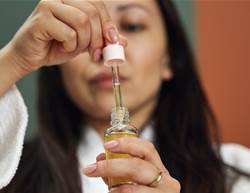
There are also topical treatments that, if used consistently, can soften lines and prevent new ones from forming. “Don’t overlook the power of daily and consistent sunscreen use, which will help prevent UV damage and may prevent premature ageing,” says Dr Svidzinski. Jackie Spagnuolo, an aesthetic nurse practitioner, adds that other powerful, line-preventing ingredients to include in your skincare routine are retinoids, which promote cell turnover and boost collagen; peptides, which help stimulate collagen production; and hyaluronic acid, which hydrates and plumps skin. “Consistency is key,” she adds – and so is staying hydrated and maintaining a healthy diet.
But Dr Goldenberg recommends being realistic about how much these will do for you. “Topical treatments – moisturiser, sunscreen and retinol – offer limited help, but are important as part of the treatment plan,” he says.
Facial treatments
Jackie also recommends getting regular chemical peels and microneedling – a facial treatment that creates temporary micro-wounds to encourage collagen production – to enhance skin cell turnover and help delay the signs of ageing. Chemical peels, specifically, “remove the outer layer of skin, promoting new skin growth,” she adds. “For those with deeply etched-in lines, resurfacing with microneedling with exosomes or laser, such as CO2, can also be effective,” Dr Goldenberg says.
Can you naturally remove 11 lines?
While certain creams and sunscreen will help delay 11 lines and support your overall skin health, there are no natural methods for removing them once they’re in place. “Once the lines are etched in, it’s not possible to remove them without a treatment,” Dr Goldenberg says.
Again, 11 lines are common with age. But if you have them and would rather you didn’t, talk to a dermatologist or a registered cosmetic nurse. They should be able to recommend evidence-based next steps.

 Newsletter
_(1).jpg&h=90&w=90&c=1&s=1)


_(1).png&h=90&w=90&c=1&s=1)