At some point in perimenopause or menopause, skin can start acting like it changed overnight. Dryness by midday. Redness that flares out of nowhere. A new sensitivity to products that used to feel reliable. Skin becomes harder to settle, harder to predict and harder to trust.
It can show up as makeup separating by lunchtime. A new sting from products that never used to tingle. Skin that swings between dry and oily without warning. Even “good skin days” can feel shorter, with flare-ups arriving faster and lasting longer.
That experience is common. The missing piece has been the reason.
Menopause changes skin behaviour
Menopause skincare usually gets framed around collagen loss, dryness and fine lines. Those shifts matter, but they do not fully match what many women feel day to day.
The bigger change sits in function. Menopause alters the conditions skin relies on to stay stable.
That environmental shift dictates how menopausal skin should be cared for moving forward.
The microbiome–menopause connection
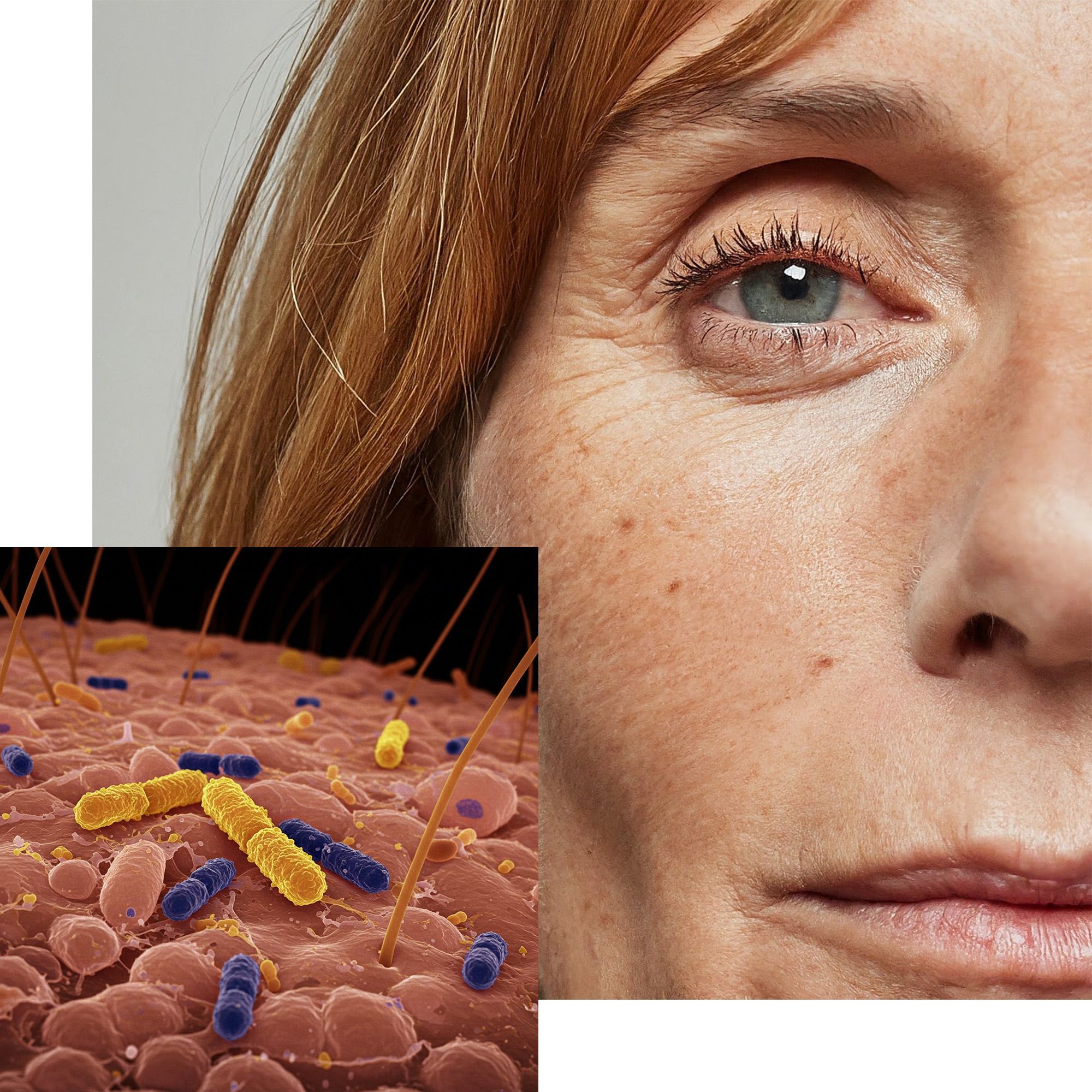
Skin has its own microbiome, a living ecosystem of microorganisms that supports hydration, barrier function and how calm, resilient and balanced skin feels.
As oestrogen declines, skin produces less oil. That change reshapes the skin environment and oil is part of what the microbiome depends on. When the environment shifts, the microbiome shifts too. Then skin behaviour shifts with it.
Dryness, sensitivity, redness and breakouts often show up as a cluster because they share the same driver: a changed skin environment.
This is the microbiome–menopause connection, a burgeoning area of research that’s being championed by pioneering Australian skincare brand Nu Allumé. It frames menopausal skin as its own category, not a continuation of anti-ageing.
Why routines stop working
When skin starts changing, many women add more such as stronger actives, more layers, more correction. For plenty of women, that ramps up reactivity and keeps skin stuck in a cycle of flare, calm, flare.
The issue is not effort. The baseline conditions have shifted. A routine built for a different skin environment can struggle once the environment changes.
Nu Allumé is built on a clear idea that menopausal skin is changing skin. It needs the environment supported, starting with the microbiome.
That shift resets what effective looks like.
Nu Allumé founder Desré Tate experienced the shift at 45 as she entered perimenopause. Dryness, sensitivity and unpredictable skin became her new normal, while much of the category continued to treat midlife skin as mature skin that simply needed stronger correction.
She worked with microbiome scientists in Queensland to understand what was happening beneath the surface. That work linked menopause to changes in the skin’s microbiome and led to Nu Allumé, positioned as an Australian world-first skincare line formulated specifically for perimenopause, menopause and post-menopause, with the microbiome–menopause connection as its foundation science.
What a microbiome-first approach looks like
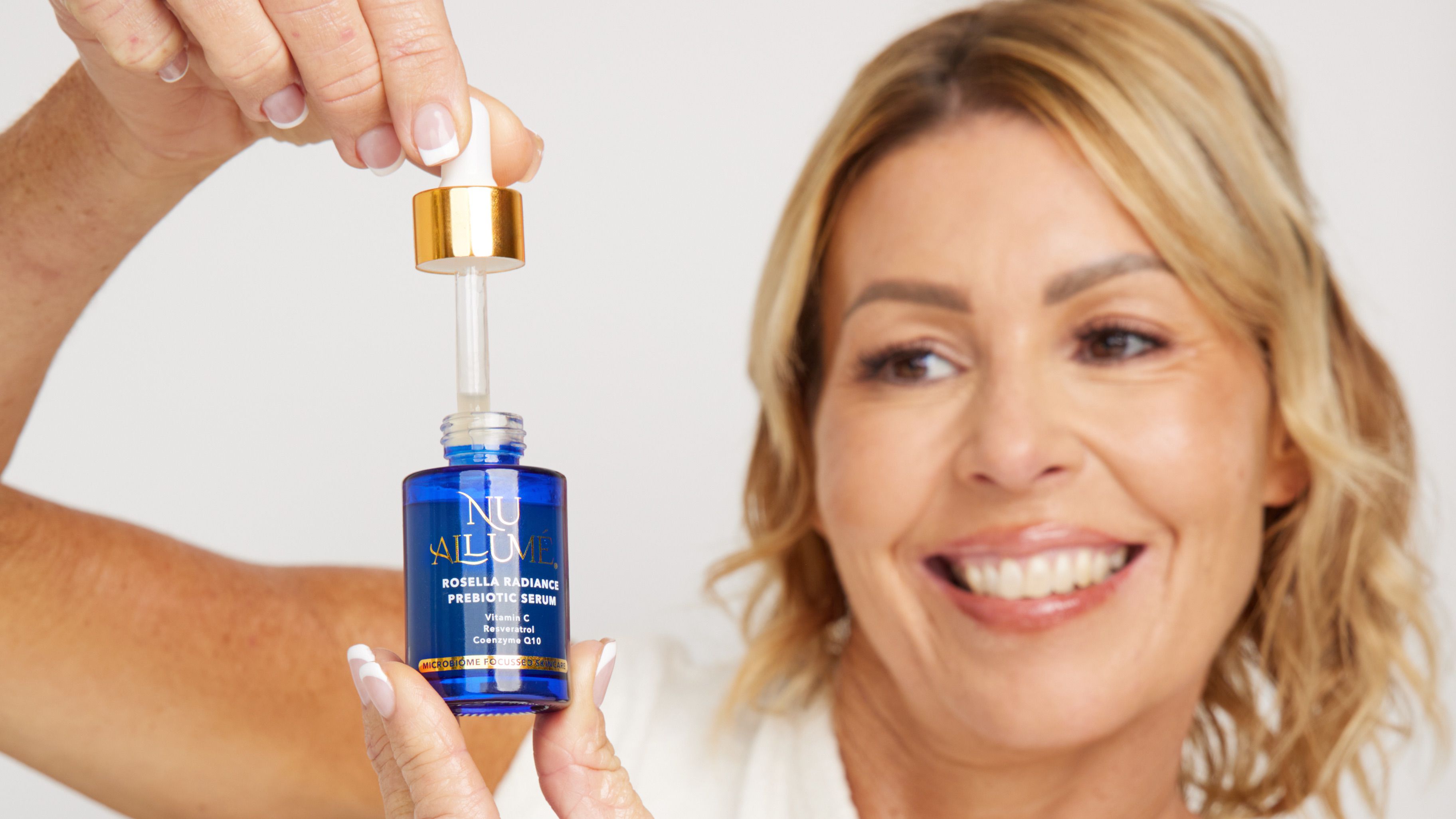
Once the goal becomes supporting the skin’s environment, formulation priorities change.
Nu Allumé’s approach centres microbiome support, hydration and barrier reinforcement for skin that has become more reactive and less predictable during hormonal transition.
The ingredient mix includes fermented components used to support hydration and barrier function, such as fermented aloe, papaya ferment and berry ferment, alongside centella asiatica, bakuchiol and panthenol, selected for how they support comfort and resilience through change.
Preservatives matter here too. Traditional systems protect the product by suppressing microbial growth, but they can continue to disrupt the skin environment after application.
Nu Allumé’s preservative system protects the formula in the bottle, then shifts function on skin, acting as a humectant rather than continuing to disrupt the microbiome environment. Product integrity stays high without working against the ecosystem skin relies on during menopause.
Once the microbiome–menopause connection clicks, the chaos starts to make sense. Dryness, sensitivity and flare-ups stop feeling random. The “why is nothing working anymore” phase gets context.
Menopause skincare is emerging as its own category, but the microbiome remains the centre of it. Skin thriving through menopause starts with healthy skin and that starts with the microbiome. That understanding underpins Nu Allumé, the brand pioneering the microbiome–menopause connection.
Shop Nu Allumé here to try it for yourself and use code PREVENTION for 20% off as a Prevention Australia reader. Add it to your evening routine tonight so you can wake up to softer, calmer-looking skin tomorrow.

 Newsletter
_(2).png&h=90&w=90&c=1&s=1)