It's not uncommon to feel like as you age, you gain a gut and lose your butt. As the years wear on, muscle tone - especially in the butt, which is the largest muscle group of the body - diminishes if you don't work to stop it. "Many of us sit down all day and actually deactivate our glutes," says personal trainer Lisa Reed. When glutes become weak, the muscle loss also leads to a slowing of metabolism - the rate at which your body burns kilojoules - thus contributing to fat gain (i.e., the gut).
Luckily, there's a two-for-one solution: strength training. When you target the glutes, quads, and hamstrings, you can build muscle and boost overall metabolic power while restoring tone to your butt.
These exercises, recommended by Reed, involve big movement patterns for the most muscle-building and metabolism-boosting benefits. Do 8 to 12 reps each, slow and controlled with good form.
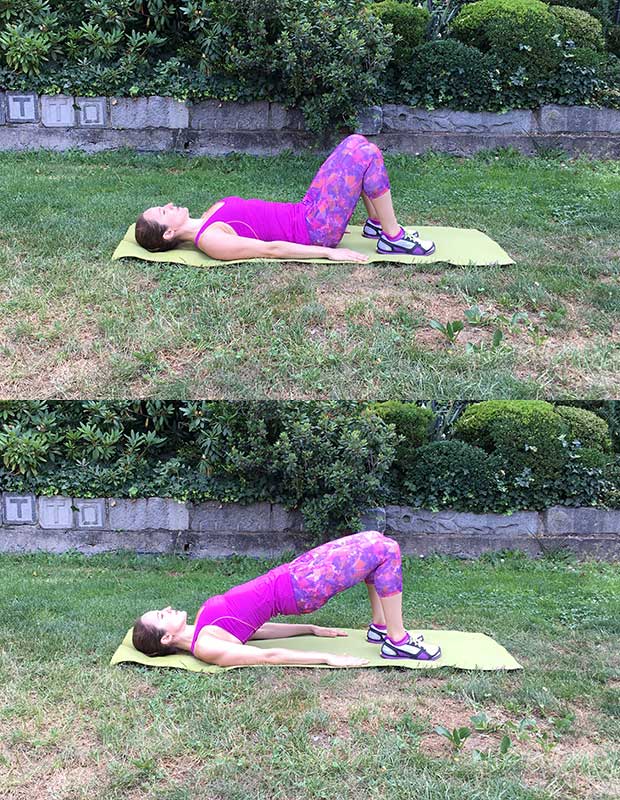
Glute Bridges
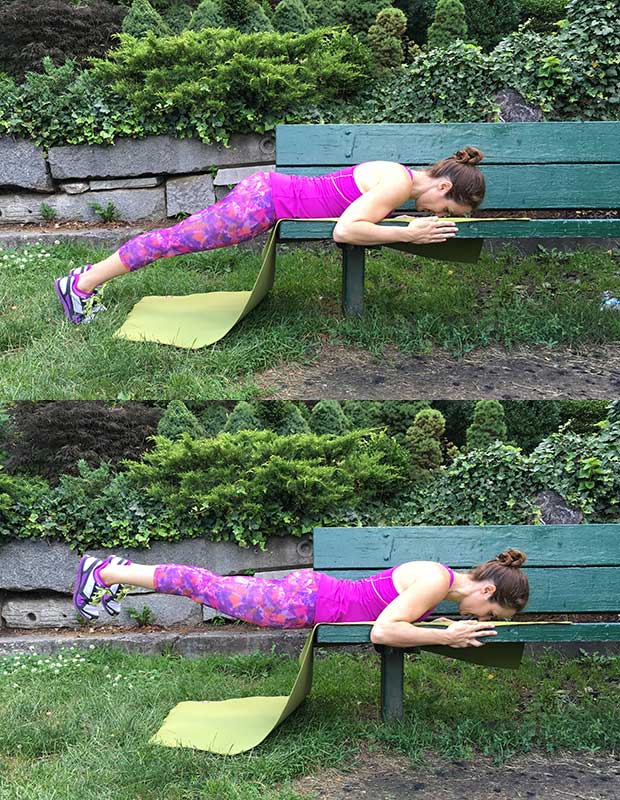
Hip extension makes the butt work, and it can open up tightness from long days of sitting. Begin either on the floor on your back, or on the floor with your feet elevated on a bench or piece of furniture. (The latter is more challenging.) With your arms on the ground along your sides, squeeze your butt muscles to lift your hips up such that your body forms a straight line from your knees to your shoulders. (Don't let your knees bump together or flare open.) Squeeze the glutes for another beat at the top, then slowly lower back down.Reverse Glute Extensions
To really target the glutes, you want to bring your hips into full extension. This move looks easy, but it's amazing how heavy your legs can feel when you hover them above the ground. Lie facedown on a bench, couch or chair, so the hinge of your lap is right along the edge of the furniture. Flex your toes in toward your nose and really straighten your legs as one unit. Squeeze your butt to lift your legs up so that they're parallel or ever-so-slightly past parallel to the ground. (You can hold on to the furniture with your hands, or make it harder by not holding on.) Hover your legs there for a second, and then slowly lower back down, but don't let your toes rest. Repeat.Lateral Lunges
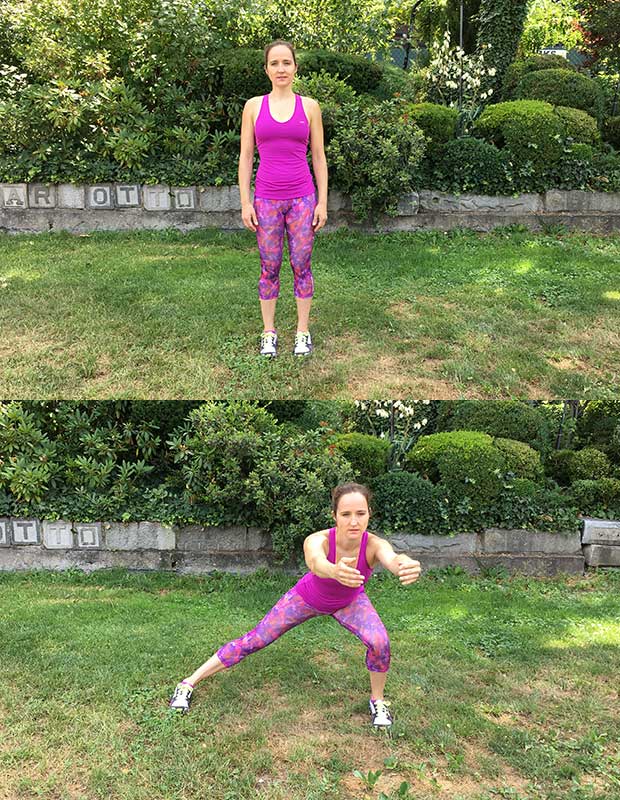
Sideways movement is extremely important in training because it builds stability on your feet. Lateral lunges work the side glutes in a more targeted way. Stand with your feet together. Step one foot out to the side, and bend that knee, sitting back with your butt as if you were aiming for a small stool - keep your other leg straight, only using it to help you balance. On the bent-leg side, your hip, knee and foot should be in the same plane. Press into that foot to push yourself back to stand.Reverse Lunges
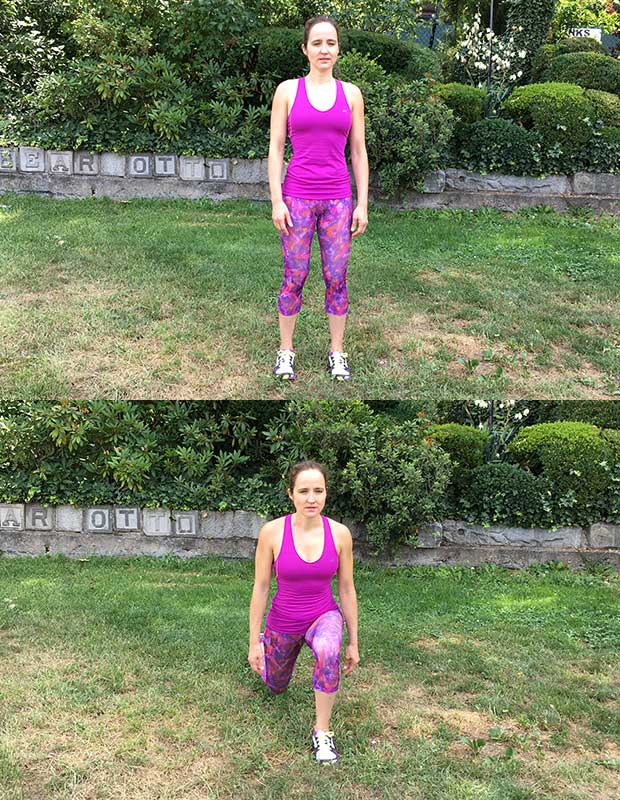
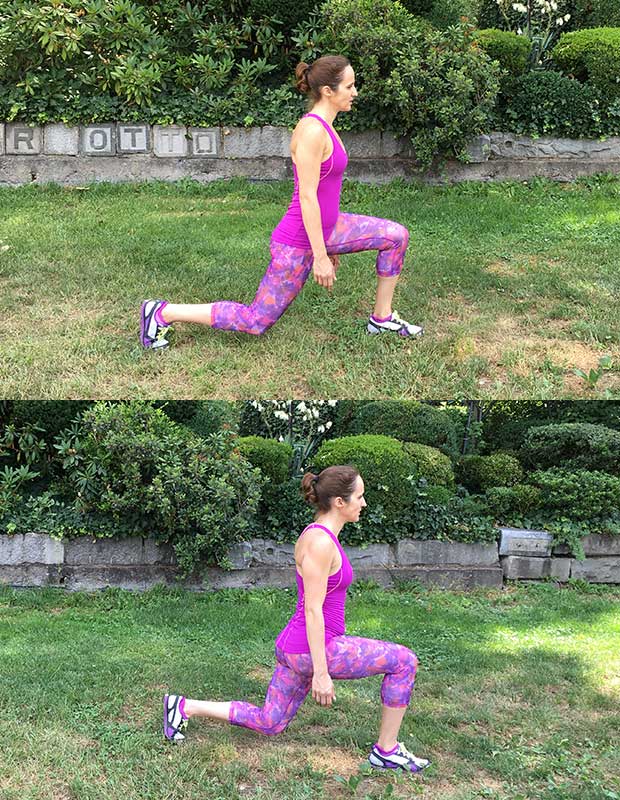
Another one-leg-at-a-time move, this one brings in more movement to challenge balance and stability. Lunges are also great because they take the legs through flexion and extension at both the knees and hips, making all those muscles work through their ranges of motion. Stand tall with feet hip-width apart. Take a big step back with one foot as you lean slightly forward and bend the front knee to 90 degrees. Push into the front foot to bring your back foot back to stand. You can do multiple reps with one leg for strength training, or alternate feet for an aerobic kilojoules-burning effort.Single-Leg Russian Deadlifts (SLRDLs)
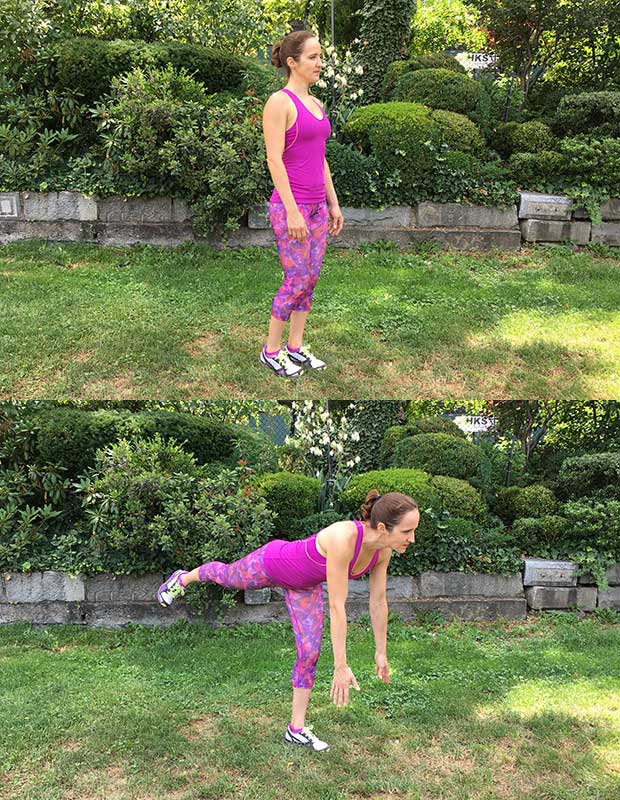
Your butt and your balance get a workout with this move. Stand with feet hip-width apart. Shift your weight into one foot. Hinge from your hips to slowly bring your torso down while you send your free leg back, keeping torso and leg in the same plane. Only go as low as you can control, maintaining that straight line from head to free foot; microbend the standing leg to help keep your balance. Use the power of the glute and hamstring of your supporting leg to bring your body back up to stand.Walking Lunges
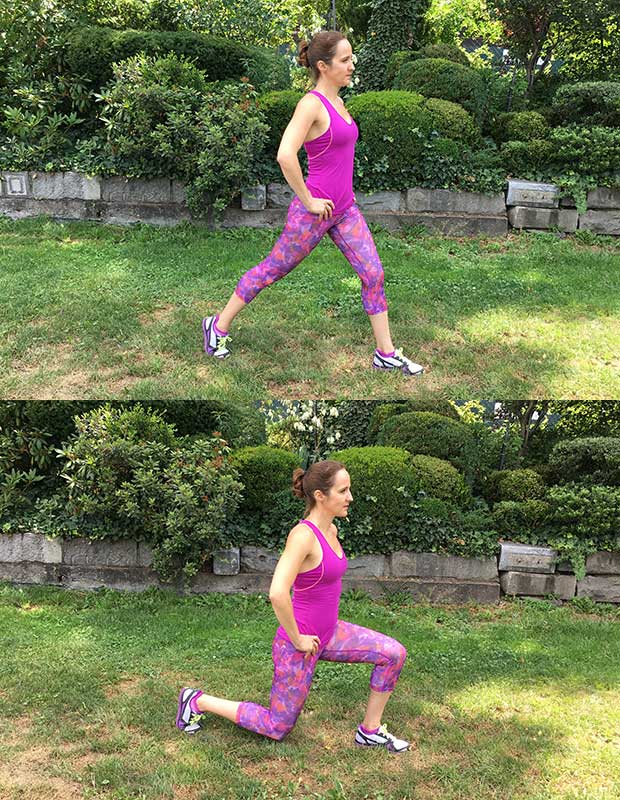
A super-exaggerated form of walking, these combine the range of motion of a lunge with the added core and balance benefits that come from shifting your weight from one side to the other. From standing with feet hip-width apart, take a big step forward with one foot. Focus on bending your front knee deeply to 90 degrees, while allowing your back knee to do the same. Push your weight into that front foot to bring your back leg up and forward. Either step immediately into the next lunge, or pause briefly in the centre to collect your balance before stepping forward.Squat
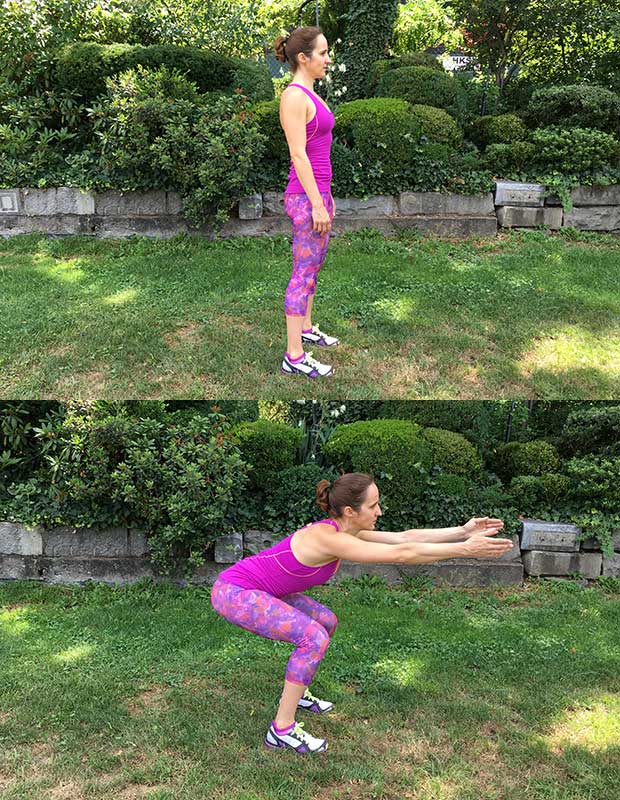
The squat is just about the most functional lower body, butt-lifting move out there. It uses every muscle from the waist down, plus the core has to kick in to stabilise the upper body. Start with feet hip-width apart. Stick your butt out as you sit back and down, as if you're sitting into an invisible chair, while raising your arms up in front of you to counterbalance. Keep your chest up, and don't let your knees go past your toes. If you notice you're doing either of those things, try squatting in front of a chair or bench, so you can focus on your form without fear of falling backwards (worst case, you'll just sit down).Step-Ups
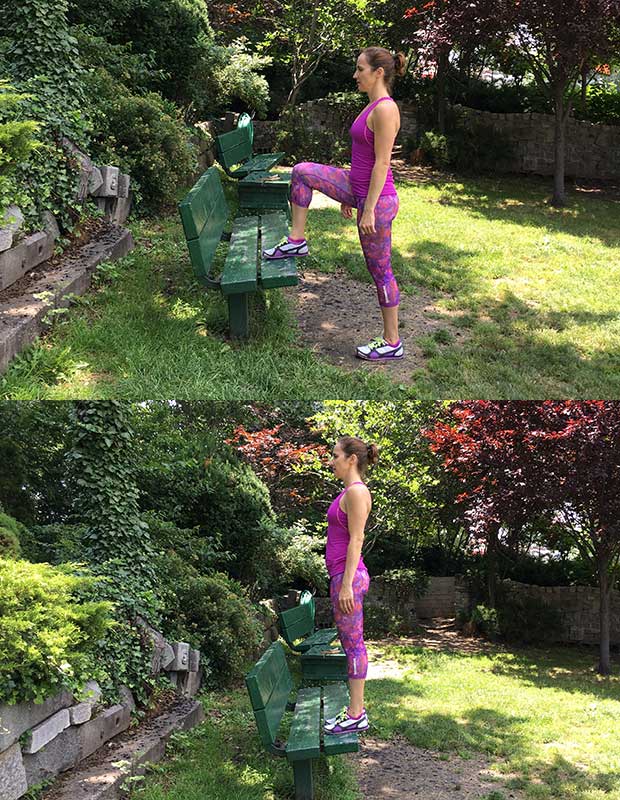
Climbing stairs is already a solid glute exercise. By using a taller step or bench, your lower body has to work that much harder. Stand in front of your step-up surface of choice - ideally, your knee will be at a right angle when you place your foot atop it. (It can be lower if that feels too challenging, or higher as long as you have the stability to keep your knee from wobbling or flaring side to side during the exercise.) Step one foot up, then push into that leg to bring your body completely to stand - don't cheat it by keeping your hips bent or by bringing your second foot up before you're fully standing. From the top, step back down with the starting foot. Do all reps to one side first for more of a strength focus, or alternate your lead foot for an aerobic bonus.Sumo Squats/Frog Jumps
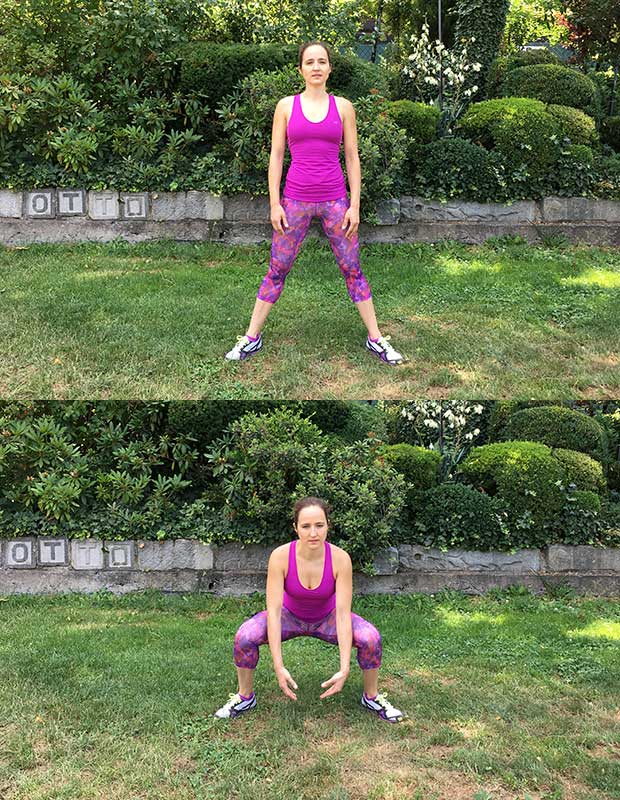
This squat variation has a wider base and hits the glutes from a slightly different angle with an assist from the inner thighs. Adding a jump brings in an aerobic element, forces the muscles to work together and boosts bone density. Start with feet wider than shoulder-width, toes turned out. Stick your butt back and squat down, bringing your arms between your legs. For the squat version, squeeze your glutes and inner thighs together to slowly stand back up. To add the jump, throw your arms forward and up while springing up off your legs. Be sure to land softly in your squat position so you're ready to go again right away.Split Squat
A really good way to target the glutes is to work them one at a time with split squats. That way, you'll be sure both sides get equal work. Step one foot forward so you're in a staggered stance. (Make sure there's space between your feet, like they're on railroad tracks rather than on a tightrope.) Place your hands on your hips. With your torso slightly leaned forward, bend both knees until they are at right angles - your body weight should predominantly be in the front leg. Press into the ground with the front foot to come back to stand. Repeat.
 Newsletter
_(6).jpg&h=90&w=90&c=1&s=1)