Hair is often the first thing people notice when they meet someone new, so it’s fair to want to put your best foot forward. But if your current shampoo and conditioner line-up is leaving something to be desired, the benefits of vitamin E oil for hair may be just what your dull, dry strands need to level up.
You may have noticed that vitamin E is a mainstay ingredient for tons of products in the beauty aisle. But while the plant-based antioxidant is known for its moisturising and anti-inflammatory properties, it doesn’t just help your skin. Just a few drops of vitamin E oil delivered to your scalp every week could be the answer to your hair woes too, according to Dr Alicia Zalka, a dermatologist.
Here, dermatologists unpack the many benefits of vitamin E oil for hair, plus everything you need to know to get the best results.
Benefits of vitamin E oil for hair
This is a versatile ingredient: “Vitamin E oil, when applied to the scalp, acts as a conditioner, helping to hydrate and rejuvenate a dry, flaky scalp. In addition, when applied all over hair, it can help boost shine and prevent hair breakage overall,” says Dr Kim Nichols, a dermatologist and cosmetic surgeon. Both applications can deliver impressive perks. Here are the top benefits vitamin E oil has for your hair.
Encourages hair growth
It can be tough to find a non-prescription product that stimulates hair growth, but vitamin E oil has properties that may help. “Vitamin E oil, because it’s an antioxidant, helps reduce oxidative stress in the scalp,” Dr Nichols says. That’s important because oxidative stress makes it hard for your body to repair any damage, she explains, causing hair follicle cells to break down, potentially leading to hair loss. Vitamin E oil works to nourish your scalp and hair, restoring proper function so your hair can grow as it should. It can also increase blood circulation to the scalp, which aids in overall hair growth, Dr Nichols notes.
Soothes a dry, flaky scalp
Vitamin E oil can be an easy remedy for dry, flaky scalps. According to Oregon State University’s Linus Pauling Institute, vitamin E is naturally produced by the body to protect and moisturise the skin. Just as applying the oil topically adds extra moisture to the skin, it similarly conditions, hydrates and rejuvenates the scalp when applied the same way.
Strengthens the hair
Our hair follicles tend to weaken naturally with age and from using chemical products and heat-styling tools, per the American Academy of Dermatology. The result: breakage and split ends. Vitamin E oil helps nurse those damaged hair follicles, making them stronger and healthier, so they’re less prone to breaking.
Adds shine
Dry, brittle, frizzy or dull hair – thanks, again, to heat, chemicals and your genetics – can be improved with vitamin E oil. Over time, a hair oil like vitamin E can act as a protective barrier (similar to the way it works for skin), sealing in moisture and giving it the nourishment it needs to be more lustrous.
How to use vitamin E oil for your hair
Dermatologists recommend starting slow and limiting your vitamin E oil use to a few times a week. This allows you to check your scalp for signs of an allergic reaction, including rashes and scalp irritation, Dr Nichols says. If you have a sensitive scalp, vitamin E may not be the best option for you, since it’s a relatively heavy compound.
Step 1: Apply
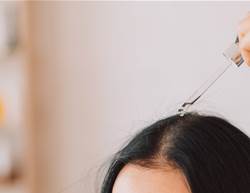
Begin with a quarter-sized amount of already-diluted vitamin E oil. You’ll know it’s diluted if the product contains carrier oils like coconut or lavender oils. Then use your fingertips and the palm of your hand to gently massage it into your hair and scalp.
You can also add a few drops of a vitamin E oil product into a shampoo or conditioner that doesn’t already contain vitamin E. This method helps ensure you get an even distribution of the product.
Step 2: Let the oil sit in your hair for an hour (or overnight)
If you want to fully take advantage of vitamin E oil’s powerful properties, wait at least an hour before rinsing it out if you applied a vitamin E oil product straight (not through shampoo). However, dermatologists say it’s safe to leave the oil in your hair overnight, as long as it’s rinsed out the following morning.
Step 3: Rinse
When you rinse your hair, be sure to do it thoroughly. Use warm water to remove any dirt and residue build-up on the scalp and hair. Once the product is fully rinsed out, you can dry your hair and style it as usual.
Does vitamin E oil work better for certain hair types?
While plenty of hair types can benefit from vitamin E oil, it may be most effective for people with “dry, coarse or damaged hair because of its moisturising and antioxidant properties,” explains Dr Supriya Rastogi, a dermatologist. “It can also help improve softness and reduce the appearance of frizz by coating the hair shaft.”
Should anyone avoid using vitamin E oil for hair?
As with any new hair or skin product you may be introducing into your routine, Dr Rastogi urges people with sensitive skin to proceed with caution. And of course, you should avoid vitamin E oil if you have a known allergy to vitamin E or to other ingredients in topical hair products. “Doing a patch test before applying it more broadly is a sensible precaution, especially for anyone with sensitive skin,” Dr Rastogi says.
—Additional reporting by Lulu Chang

 Newsletter


_(18).jpg&h=90&w=90&c=1&s=1)
_(11).jpg&h=90&w=90&c=1&s=1)