Most of us are sun optimists – armed with a million excuses for not wearing sunscreen. Top among them? Not wearing SPF on cloudy days or expecting a window to protect you from UV damage. Here's another one: Your hair will block out the sun and safeguard your scalp. Nope. Contrary to popular belief, you actually do need to wear sunscreen on your scalp.
“Your scalp is skin and UV rays don’t give it a pass just because there’s hair on top of it,” says Dr Mona Gohara, a board-certified dermatologist in Connecticut and an associate clinical professor of dermatology. “Any exposed skin at your part area, your hairline, or where hair may be thinning, can get the same sun damage – including a sunburn and skin cancer – as the rest of your skin.”
Read on for the answers to all of your burning questions about protecting your scalp in the sun.
Does hair provide any sun protection for your scalp?
“Hair does provide some physical protection, but it’s not a force field, and I wouldn’t consider it your sunscreen,” says Dr Gohara. “Thick hair generally gives the scalp more coverage than fine, sparse hair, and a darker colour may absorb more UV than lighter hair. But hair can’t protect your part, your hairline, or any other exposed skin, including the tops of your ears, which are vulnerable.”
Can a scalp sunburn trigger hair loss or breakage?
“While one mild sunburn usually isn’t going to cause permanent hair loss, a significant burn creates inflammation around the hair follicles that could potentially contribute to temporary shedding. Repeated UV exposure can also damage the hair shaft itself, making hair drier and more prone to breakage,” Dr Gohara explains. “So, SPF is protecting both the skin underneath and the hair above it.” (Sun damage not only dries out your strands, but also oxidises colour-treated hair, causing it to fade or get brassy.)
Can you get skin cancer on your scalp?
Your scalp isn’t exempt from skin cancer just because it’s mostly covered by your hair. “Not only can skin cancers occur on the scalp, but they are also less visible, and that makes them particularly dangerous,” says Dr Gohara. “Hair can literally hide a changing spot from view, which is why an annual full-body skin exam is critical. A dermatologist will look through the hair and examine areas of the skin that you can’t see yourself.”
Who is most at risk for scalp sun damage?
“Every skin tone can experience UV damage, and people with thinning hair, bald spots, or very fine hair can burn more easily,” says Dr Gohara. “Taking certain medications can also increase photosensitivity, including some antibiotics, blood pressure medications and topical retinoids like Retin-A. It’s a good idea to ask your doctor or pharmacist about your specific medication.”
How should you apply sunscreen on
your scalp?
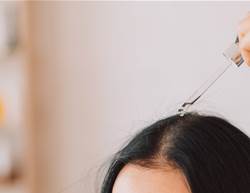
Rubbing a goopy SPF lotion on your head is obviously not an option. This is when a sunscreen spray formulated specifically for the scalp and hair is key: “A lightweight and transparent spray-on mist with broad-spectrum SPF 30 or higher works well on your scalp and won’t leave a residue on your hair,” Dr Gohara says. “If it’s a water-resistant formula, that’s even better for beach and pool days.”
She suggests focusing the spray on areas like the part and the hairline. “And don’t forget your ears! The tops and backs of the ears are chronically sun-exposed and easy to miss with sunscreen.” A brush-on, translucent mineral powder sunscreen formula is also a great mess-free way to protect targeted spots like the part (just make sure to apply when your hair is dry). Reapply SPF every two hours when outdoors, especially if you’re sweating or swimming.
Hats and scarves are sunscreen too!
If slathering any sunscreen onto your scalp isn’t appealing to you, the good news is there’s another option. “A wide-brimmed hat is one of my favorite scalp-protection hacks because it acts as a physical blocker, shielding your head, hair, ears, face, and neck from harmful UV rays,” Dr. Gohara explains. “Look for tightly woven, opaque materials rather than an open-weave straw hat that allows sunlight through.”
A hat (especially if it’s labeled with an ultraviolet protection factor (UPF) like UPF 50+) is also the easiest way to protect a baby’s scalp in the sun. And the same goes for guys, who are much more likely to wear a baseball cap than put sunscreen on their heads.

 Newsletter


_(18).jpg&h=90&w=90&c=1&s=1)
_(11).jpg&h=90&w=90&c=1&s=1)