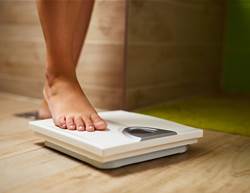
A week is only seven days, and you will spend roughly a third of that time asleep, not burning many extra kilojoules.
In other words, you cannot lose a large amount of weight in a week. The more helpful question is why that rapid-loss mindset feels so compelling in the first place.
The pressure is real. Being thin, or thinner, still feels like a constant goal, especially now that GLP-1 agonist medications are making it possible for many people to lose weight and keep it off. For decades, trying to do the same through lifestyle changes alone has been incredibly hard. A 2022 review of the research found that only about 25% of people can keep weight off for a year or more using only diet and exercise.
But framing weight loss around “how much can I drop in seven days?” is unhelpful and potentially harmful. It steers you towards extreme measures, like crash dieting, that are not healthy or sustainable. “We’re not into double workouts, laxatives, counting and aggressively skipping kilojoules, skipping meals or anything that leaves you feeling poorly,” says dietitian Lauren Slayton. “This is eating disorder territory. I guess that needs to be said.”
It is also worth asking if you need to lose weight at all. Several studies over the years, looking at women of different ages in the United States and around the world, have found that 30 to 50% of women in the “normal weight” range by BMI still believe they are too heavy. “It’s not necessary that you should be the same weight you were when you were 20, 30 or when you were 50,” says therapist Margo Maine. “You are supposed to gain weight as you age, to be a little thicker, with your weight distributed differently.”
How much weight can you realistically lose in a week?
The basic maths looks like this: how much body fat you lose over a week depends on the gap between what you eat and what you burn.
Roughly speaking, a pound of body fat is stored when you eat about 3,500 kilojoules more than you use. Likewise, if you eat 3,500 kilojoules fewer than you burn over a week—all else being equal—you will lose around a pound. A 7,000-kilojoule deficit would translate to about two pounds.
Losing around one to two pounds (0.5 to 1 kilogram) per week is safe, sustainable rate when the loss comes from gradual, consistent changes rather than extreme restriction.
But is it possible to lose more in a week?
A short, structured reset can shift the number on the scale a bit faster, but most of that change will not be pure fat loss.
Slayton says her one-week pre-event eating plans—usually used before a big occasion when someone wants to feel more comfortable in a slightly snug dress—can lead to up to 5 pounds (a little over 2 kilos) lost in seven days, with smaller losses in people who are already quite petite.
The important caveat: that number is only what shows up on the scale.
“You’re not losing more than a couple of pounds of body fat per week so it’s a little fat and a little fluid loss,” says specialist in nutrition and weight management Dr Caroline Apovian. During these weeks, clients mostly cook at home, lean on vegetables and fish, and cut out alcohol and added sugar. “We don’t advise weeks like this more than once a quarter or season—it’s not how to eat day in and day out.”
Over-restricting your intake can also backfire, even if you are not at risk of an eating disorder. Being too rigid tends to trigger a rebound. “People who try to lose weight in a week or a month are going to gain it back,” she explains. Repeatedly gaining and losing weight is also tough on long-term health.
Rapid loss often comes with a hidden cost: muscle. When you push for quick drops on the scale, you usually lose muscle along with fat. Muscle tissue helps you burn kilojoules at rest, so losing it can slow your metabolism and make it harder to keep weight off even if you continue to restrict, Dr Apovian adds.
So what should I do if I want to look slimmer in a week?
If you have a one-off event coming up, a gentle de-bloat is a safer focus than aggressive weight loss.
Alongside any small, sensible changes to your eating, Slayton suggests adding what she calls “delicious de-bloaters”: avocado, asparagus, dandelion tea, lemons and parsley. “Are those helping you lose more than water? No. But do they make you feel a little less bloated and puffy? Sure.”
After that, the aim is to return to your usual healthy but not overly strict pattern. A short, focused week is exactly that—short. “We all know that doing a quick one-off sprint to thinner means you won’t be able to sustain all of it,” Slayton says, and that is fine. If you avoid “making up for” every missed treat the following week, you may keep a little of that loss without sliding into extremes.
The bottom line
If your doctor has advised weight loss for health reasons, it is far better to talk with them about a slower, steadier plan you can live with for months and years, not just seven days.
For a special occasion in the near term, think de-bloating strategies, comfortable posture, and clothes that actually fit your body now. Or skip the sprint altogether and choose an outfit that feels good as you are—no crash week required.

 Newsletter
_(6).jpg&h=90&w=90&c=1&s=1)