Pilates was not always a packed studio class. It began in the early 20th century, developed by Joseph Pilates as a way to elongate, strengthen and restore the body through precise, controlled movements. Over time, the method has evolved into two main styles most people recognise today: mat Pilates and reformer Pilates. Both build strength and control in slightly different ways, which raises a common question: which one is the better workout.
There are plenty of pros and cons to weigh up with both approaches. Below, instructors and fitness experts explain how they differ and share guidance to help pinpoint which style suits current goals and body best. Many people end up mixing both.
Mat Pilates benefits
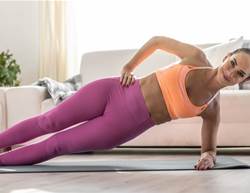
Mat Pilates “is the foundation of the entire Pilates method,” explains Pilates instructor Wolfe. Unlike reformer sessions, which use a spring-loaded apparatus to guide movement and reduce impact, mat work relies on the body to generate all the control. Every lift, reach and roll is powered by core stability and bodyweight strength.
Because of that, mat Pilates can build deep core control, sharpen body awareness and improve mobility with very little equipment.
Building strength
Mat Pilates helps build deep core strength and stability, sharpens body awareness and alignment and supports mobility and functional fitness needed for everyday tasks and activities, says Wolfe.
Convenience and accessibility
A major plus is how easy it is to set up. Simply roll out a mat and start moving. “The most obvious benefit is that it’s accessible anywhere—the living room, a hotel room, the patch of carpet your dog just vacated,” says personal trainer and Pilates educator Portia Page. “No equipment needed or you can use home props such as a hand towel and pillows.” This also makes mat Pilates more budget-friendly than reformer work, because an ongoing studio membership is not essential.
Beginner and veteran friendly
Mat Pilates can meet different fitness levels in the same session. “Beginners learn alignment and breathing and can take it easy. Advanced practitioners can make mat brutally delicious with variations and tempo,” says Page.
Mat Pilates potential downsides
Some potential drawbacks to mat Pilates, according to the experts, include the risk of miseducation, especially when following generic workouts at home.
Miseducation, if you’re taking a class at home
“The key is making sure you’re taking an actual Pilates class,” says certified Pilates instructor Heather Andersen. “As Pilates has grown in popularity, many other workouts have borrowed Pilates-inspired movements, but true Pilates is one part exercise and one part technique, so it’s less about the exercise itself and more about how you move. The Pilates principles of precision, control, breath and alignment are essential,” she adds.
Intensity
“Without springs to support or guide movement, people often feel like they’re ‘bad’ at Pilates, when in reality, mat just demands more internal organization and body weight awareness and strength,” says Page. Wolfe adds that without props or springs to provide tactile resistance, it may take longer to notice progress.
Modifications can be tricky
Some people with injuries or specific movement needs may do better with the support a reformer provides. “While you can modify anything, some bodies benefit immensely from the support and adjustability of the reformer carriage, footbar and straps,” says Page.
Reformer Pilates benefits
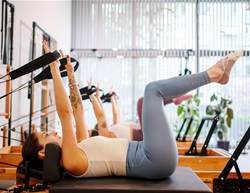
Reformer Pilates uses a spring-loaded platform on a sliding carriage to offer both support and resistance, “ultimately making the work more accessible,” says Wolfe. “It’s adaptable for beginners, injury rehab and advanced movers alike.”
It’s low-impact and adjustable
For beginners, people recovering from injury or anyone who prefers lower impact exercise, reformer Pilates can be a comfortable way to build strength with a sense of guided training, Wolfe says. That versatility makes it suitable for a wide range of bodies and conditions, Page adds.
More control over movement
Along with extra cushioning, the design of the reformer can help guide movement. That support often makes it easier to control range, tempo and alignment. Over time, this can build stronger body awareness, says Page.
Adaptability
Because the reformer has multiple settings and attachments, it can be adjusted to suit many different needs. “You can make the same exercise rehab-gentle or athlete-intense with just a spring change or footbar adjustment,” says Page. This flexibility allows sessions to scale up or down without changing the whole program.
Instructor-led feedback
With reformer work, feedback comes from both the instructor and the equipment. Subtle shifts in the carriage, springs or straps can highlight imbalances or alignment issues, while an instructor can cue corrections. Over time, that combination can refine form, balance and confidence.
Reformer Pilates potential downsides
There are a few practical and safety considerations with reformer Pilates.
Studio or equipment required
A Pilates reformer is a substantial piece of equipment. Studios need to maintain machines and space, which can make memberships more expensive. For similar reasons, buying a reformer for home use can be a significant investment.
Beginner supervision is necessary
Although the reformer is often less intimidating after a few sessions, it does require some know-how to use safely. “You can’t just jump into a class without some one-on-one instruction,” says Wolfe. Introductory guidance helps with learning how to adjust springs, set up the carriage and use the straps correctly before progressing to more complex sequences.
Reformer Pilates vs mat Pilates: Similarities
Both mat and reformer Pilates help build strength, mobility and better posture. Core strength, flexibility, joint mobility and a stronger mind–body connection are all shared benefits. Both can also be low impact, they just reach that point in different ways, Page says.
Andersen adds, “Both emphasize controlled movement, breath and precision, which helps create long, balanced strength while reducing strain and supporting longevity.”
Reformer Pilates vs. mat Pilates: Differences
A well-rounded Pilates practice usually includes both mat and reformer work. “Joseph Pilates never intended the reformer to stand alone,” says Wolfe. “Being over-reformed leaves gaps in strength and control that mat work and other apparatus naturally fill.”
Both styles build strength, control and mobility, but they feel and function a little differently.
Choose Mat Pilates if...
- Independent, minimalist workouts are more appealing
- At-home sessions suit schedule and preferences
- Something travel friendly or low commitment is the goal
Choose Reformer Mat Pilates if...
- More feedback, support or alignment-focused modifications are helpful
- A sense of community or in-person instruction feels motivating
- Variety and a change of pace keep exercise more engaging
“Mat and reformer aren’t competitors—they’re collaborators,” says Page. “People get the best results when they use both. Mat teaches you to organise your body. Reformer teaches you to apply that organisation under load.”
Doing both will not suit every routine or budget, and that is okay. Each style can still offer a challenging, effective workout on its own.

 Newsletter
_(2).png&h=90&w=90&c=1&s=1)