If you’ve ever had sciatic nerve pain, you know it does not do subtle. The sciatic nerve is the longest nerve in the body, running from the lower back down the back of the leg, explains orthopaedic spine surgeon Dr Rohan Desai.
“If injured, it can cause debilitating pain, tingling, and burning throughout the entire lower back and lower extremity,” Dr Desai says.
The good news: the right stretches can help take pressure off the nerve. They are simple, equipment-free and easy to do in bed, either before getting up or while winding down.
Sciatica is relatively common. Between 10% and 40% of people experience it at some point. It often shows up in your 40s, but it can happen at any age.
The routine below was created by physical therapist Jennifer Howe. It targets three common drivers of sciatic nerve pain: a herniated disc (a bulge in the cushioning between the bones of the spine), age-related spinal changes and tight hip muscles.
These stretches, used alongside any treatment plan recommended by a healthcare professional, may help reduce pain and discomfort. If anything feels sharp, worsening or unfamiliar, stop.
Sciatica stretches
For best results, try these daily before getting out of bed or at night before sleep. Move slowly and stay within a pain-free range. Speak with a GP or physio before starting a new routine, especially if symptoms are severe or persistent.
1. Press-up

This stretch can help when sciatic pain relates to a herniated disc.
How to do it:
- Lie on your stomach.
- Place elbows directly under shoulders, forearms flat on the bed, parallel to each other.
- Gently lift your chest, extending through the spine from tailbone to the top of the neck. Let the lower back arch comfortably.
- Hold for 30 seconds (1 repetition), breathing steadily.
If leg pain eases, complete two more repetitions, then move to the next stretch in the sequence.
2. Press-up Extension
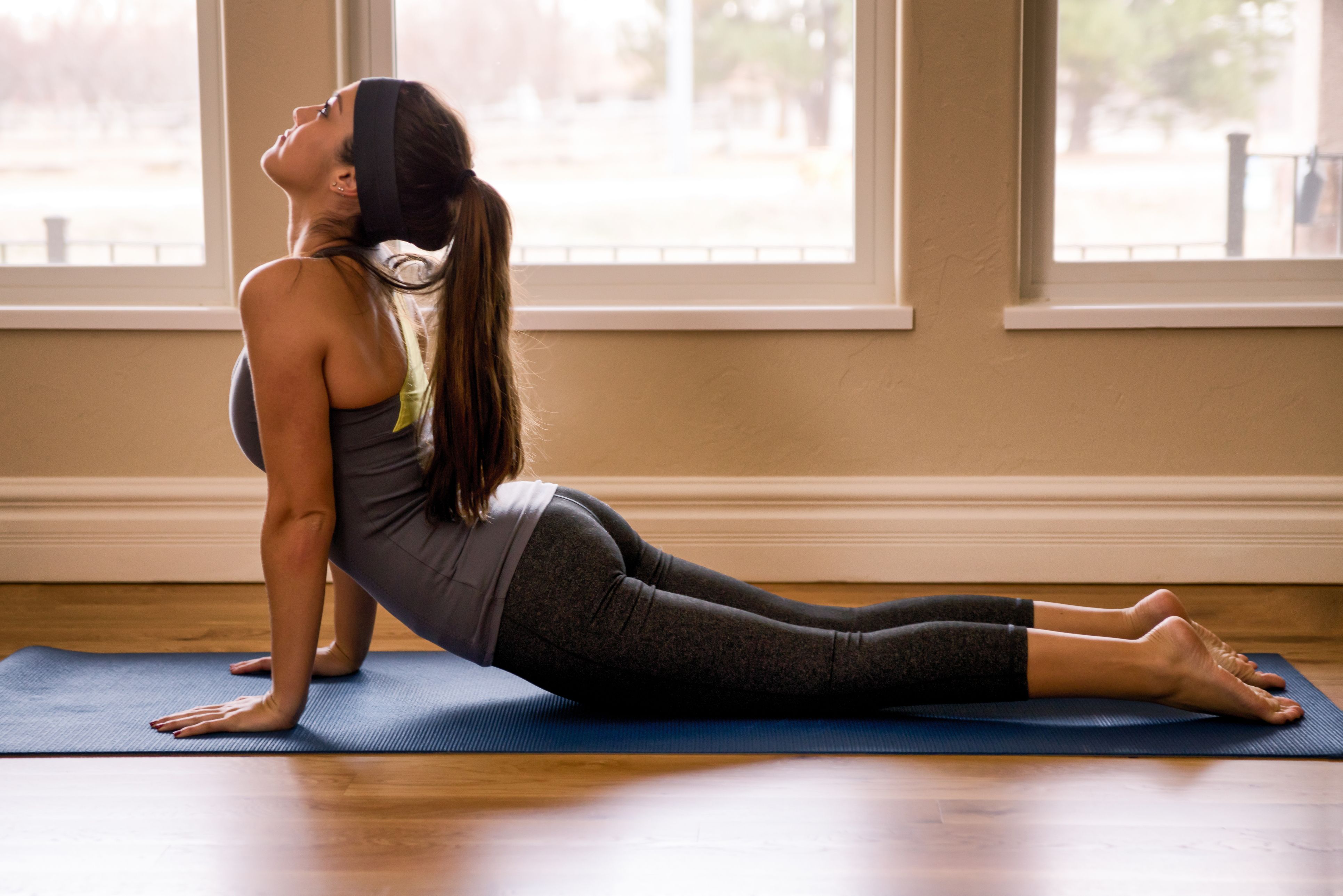
This stretch can help when sciatic pain links back to a herniated disc.
How to do it:
Lie face down with hands flat beside your shoulders. Press palms into the bed to lift your upper body while keeping hips and pelvis heavy on the bed. Lengthen through the spine from tailbone to neck and allow the lower back to arch. Stop lifting if you feel pressure building in the lower back.
Hold for 10 seconds, then lower slowly to the start for one rep. Do 10 reps for one set, aim for three sets.
3. Knees to Chest

If spinal changes contribute to sciatica, gently rounding the lower back can help create space around irritated structures.
How to do it:
Lie on your back and slowly draw both knees toward your chest. Let the low back soften into the bed.
Hold for 30 seconds for one rep. If leg pain eases, do three reps, then move on.
4. Posterior Pelvic Tilt

This small movement targets the deep core and can reduce tension through the lower back.
How to do it:
Lie on your back with knees bent and feet flat. Gently draw the abdominals in and flatten the lower back into the bed.
Hold for 5 seconds, then release for one repetition. Do 10 reps.
5. Knee to Opposite Shoulder
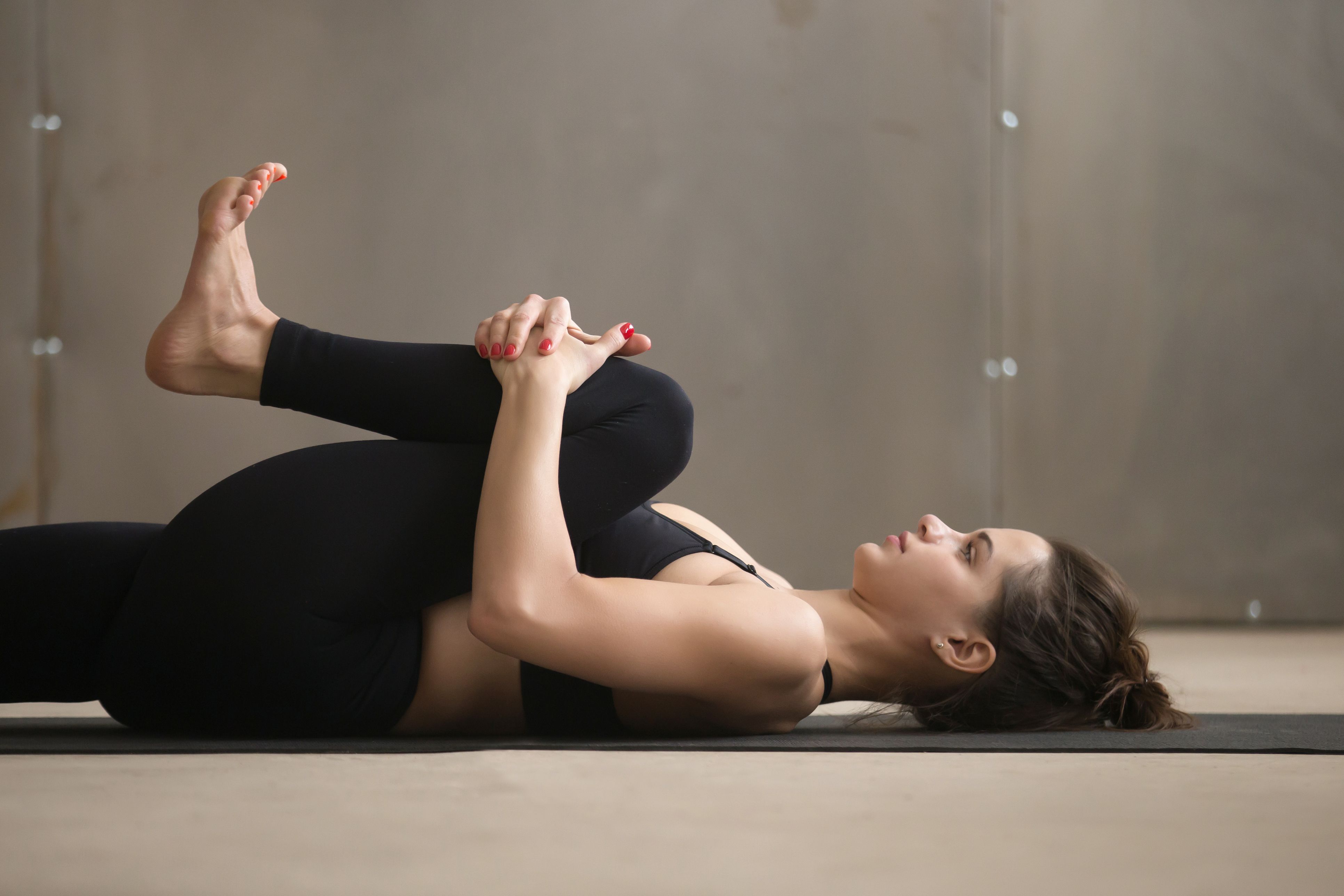
Tight hip muscles can press on the sciatic nerve. This stretch targets that hip tension.
How to do it:
Lie on your back with legs extended and feet flexed. Lift the right leg and clasp hands behind the knee. Gently draw the knee across the body toward the left shoulder.
Hold for 30 seconds for one rep. Do three reps, then switch legs and repeat.
6. Figure 4

This is a classic hip stretch for glute and piriformis tightness.
How to do it:
Lie on your back with knees bent and feet flat. Cross the right ankle over the left knee to form a “4”. Thread hands behind the left thigh and gently draw the legs toward the chest while pressing the right knee away.
Hold for 30 seconds for one rep. Do three reps, then switch sides and repeat.
7. Pigeon pose

Some sciatic pain links to a tight piriformis muscle, explains Dr Desai. The piriformis sits deep in the hip region and the sciatic nerve runs close by.
“For this type of sciatic pain,” he suggests, “try a hip-opening stretch like the pigeon pose.”
How to do it:
Start on all fours. Bring the right knee forward toward the right wrist and extend the left leg straight back. Adjust the right shin so the leg forms an L-shape and the sole of the foot angles left. Lift the chest first (a mini press-up), then fold forward over the front leg and let the hips relax. Rest on forearms if needed.
Hold for as long as comfortable, then repeat on the other side.
How to safely do sciatica stretches
“The most important thing is to listen to your body and avoid movements that cause pain,” says Dr Desai. “Start slow and gradually increase the intensity. Prioritise form and posture during the exercises to ensure safety throughout the entire movement.”
How do I get rid of sciatica ASAP?
A mix of stretching, over-the-counter anti-inflammatories and stepping back from strenuous activity until symptoms settle can support recovery, Dr Desai says.
Can you get rid of sciatica by stretching?
It depends on what is driving the pain and how severe it is, but stretching often helps. The most useful movements target the large muscles of the upper leg and buttock area, Dr Desai says.
When to see a doctor about sciatica pain
Seek medical help if pain feels debilitating, you notice persistent numbness or tingling, you develop muscle weakness or you have any loss of bowel or bladder control.

 Newsletter
_(11).jpg&h=90&w=90&c=1&s=1)


_(12).jpg&h=90&w=90&c=1&s=1)
_(14).jpg&h=90&w=90&c=1&s=1)
_(11).jpg&h=193&w=250&c=1&s=1)
_(6).jpg&h=193&w=250&c=1&s=1)