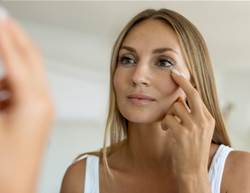
As skin changes with age, makeup often needs a reset too. One area that can feel especially tricky is the under-eye area, where discolouration and fine lines can be more noticeable and where makeup can crease or settle.
When it comes to makeup for mature skin, concealing under-eye wrinkles and darkness “is truly one of the most daunting tasks,” makeup artist Laura Geller says. With the right prep and a lighter touch, she explains it is possible to brighten the under-eye area without drawing attention to texture.
Below are Geller’s step-by-step tips for using makeup to address dark circles and fine lines, especially for women over 50.
Start with smart prep, not heavy eye cream
Geller advises against applying a thick eye cream right before makeup. She says it can make products slip, smudge or break down faster across the day.
“Eye cream is going to take off your makeup every time you blink—your mascara is going to get hydrated and you’re going to make a mess under your eyes,” Geller explains. “But primer—primer doesn’t transfer. So that’s number one: Use a primer and bring it up under your eye.”
A hydrating primer used sparingly can help create a smoother base and reduce the chance of concealer settling into fine lines. Eye cream can still have a place in an overall routine, but many people find it works better at night, rather than layered under makeup in the morning.
Choose a concealer that matches your main concern
The best concealer depends on what you are trying to correct.
If the main issue is mild darkness, Geller suggests a cream or wand-style concealer because it is easy to blend and tends to sit more naturally on the skin. “If they’re not that bad, then the cream concealers and wand concealers are great. They glide on easily, they blend easily,” she explains.
If the darkness is deeper, she suggests a thicker formula. “But if you’re somebody who has really dark circles, look for a concealer in a pot, because it has a more putty consistency and it’s thicker, and it will cling more to the skin and build up in the area.”
If fine lines are the bigger concern, a lighter, more hydrating formula can help avoid emphasising texture. In this case, less product usually looks better than more coverage.
Apply concealer where the darkness actually sits
Under-eye darkness often concentrates closer to the inner corner and does not always extend all the way to the outer corner. Geller suggests placing concealer only where it is needed, rather than sweeping it across the full under-eye area.
She also recommends stopping short of the outer corner if creasing is a concern. “So if it’s lines and wrinkles that you’re worried about enhancing when you smile, keep the concealer blended just up to the third quarter of the eye. It’s a little trickier to do, but put less and you can always build if needed,” Geller explains. “Control the amount you put on.”
This approach can help avoid a cakey finish and reduce the chance of emphasising fine lines around the outer eye area.
Set lightly so it stays put without looking dry
Once concealer is in place, Geller recommends setting it with a very light layer of powder to help reduce creasing and improve wear.
“You don’t have to go heavy,” she says. She suggests choosing a powder that sets without adding obvious texture. The key is avoiding dryness, which can make the under-eye area look more lined.
A soft brush and a light hand usually work better than pressing on a thick layer. Setting should lock makeup in place, not mattify the under-eye area completely.

 Newsletter


_(18).jpg&h=90&w=90&c=1&s=1)
_(11).jpg&h=90&w=90&c=1&s=1)